
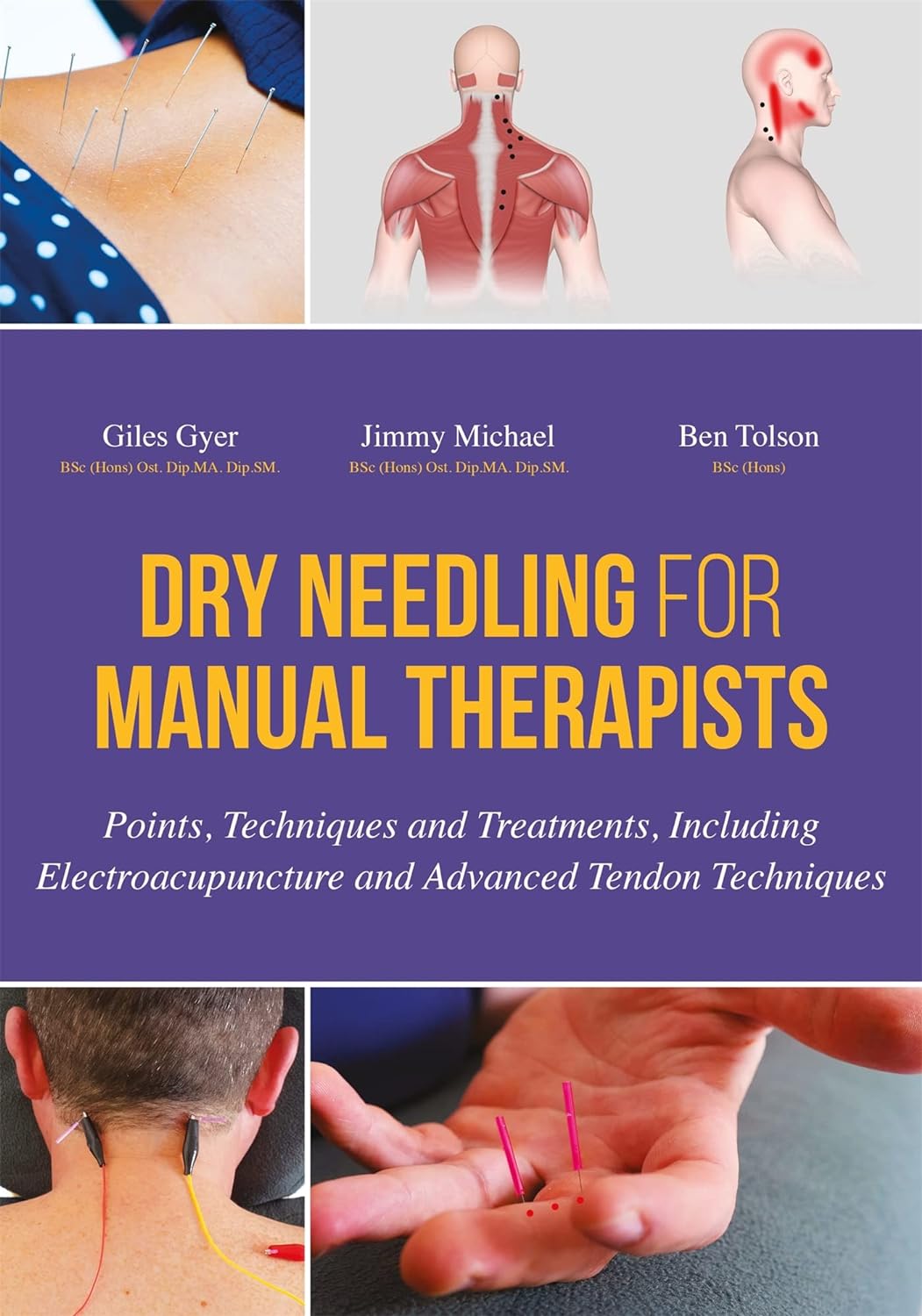
Designed to be a go-to reference for assessment and treatment planning in the clinic, this is a clear and concise handbook for students and practitioners of dry needling, or medical acupuncture. It includes:
· Comprehensive medical illustrations demonstrating trigger point locations and associated pain referral patterns
· Easy-to-follow instructions and photographs demonstrating musculoskeletal dry needling points and electroacupuncture techniques
· Dedicated section on the acupuncture treatment of tendinopathy
· Vital information on palpation and correct needling techniques
· Practical guidance on best practice, safety and treatment planning
· Overviews of the history and key principles of Traditional Chinese medicine and acupuncture
· Up-to-date research on the effect of acupuncture in the treatment of MSK conditions, myofascial pain, trigger points (MTrPS), fascia and pain.
The book will be an essential aid for osteopaths, physiotherapists, sports rehabilitators, chiropractors, massage therapists, as well as traditional acupuncturists wishing to understand a Western approach on acupuncture. Other health professionals incorporating, or looking to incorporate dry needling into their treatment programme, will also find this book an invaluable resource.
What do reviewers commonly say about Dry Needling for Manual Therapists?
Key strengths highlighted in reviews
1. Practical, clinic-focused guide
Reviewers consistently describe the book as a highly practical reference designed for real-world use.
It’s valued as a “go-to” handbook for assessment and treatment planning, especially in clinical settings.
2. Clear explanations and strong structure
The writing is often praised for being:
clear and easy to follow
logically organized
Many reviews highlight that the book is well laid out, making techniques simple to understand and apply.
3. Excellent anatomical illustrations
A major strength mentioned is the quality of illustrations, especially for:
trigger points
needle placement
These visuals make it easier for learners to translate theory into practice.
4. Bridges multiple disciplines
Reviewers appreciate how the book connects:
manual therapy (physiotherapy, osteopathy)
acupuncture-based concepts
It helps practitioners from different backgrounds fill knowledge gaps—for example, therapists learning needling techniques or acupuncturists strengthening musculoskeletal knowledge.
5. Balanced depth (not overly theoretical)
The content includes:
scientific background
historical context
clinical reasoning
However, reviewers note it avoids being overly dense, keeping theory relevant and manageable.
Common criticisms
1. Limited depth for advanced specialists
Some readers feel the book is:
more of an introductory or intermediate guide
not detailed enough for highly experienced practitioners
2. Focused scope
Because it’s centered on dry needling techniques, it may not fully cover:
broader rehabilitation strategies
alternative treatment approaches
3. Technique-dependent learning
A few reviewers imply that hands-on training is still essential, since reading alone isn’t enough to master needling safely and effectively (a common limitation of procedural texts).
Overall takeaway
Across reviews, Dry Needling for Manual Therapists is widely seen as:
A clear, practical, and well-illustrated clinical guide
Especially useful for physiotherapists, osteopaths, and manual therapists learning or refining dry needling
Strong in usability and cross-disciplinary integration
However, it’s best suited as:
an introductory-to-intermediate reference, and
a companion to hands-on training, rather than a complete or advanced standalone resource.
Related books:
 Osteopathic and Chiropractic Techniques for the Foot and Ankle
 Orthopaedic Physical Therapy Secrets
 Advances in acupuncture for heel pain: towards integrative practice and research
 Taming Idiopathic Toe Walking: A Treatment Guide for Parents and Therapists
 Heel Pain: Healing the Heel
 Clinical Skills in Treating the Foot
 Foot and Ankle Sports Medicine
 Revision Surgery of the Foot and Ankle: Surgical Strategies and Techniques
 Merriman’s Assessment of the Lower Limb
 Rheumatology Secrets
 Reflexology: Hands-on Treatment for Vitality and Well-being
 Understanding the Human Foot
 The Foot and Ankle in Rheumatology
 Essentials of Foot and Ankle Surgery
 Understanding Diabetic Foot: A Comprehensive Guide for General Practitioners